















2026 Ultimate Comparison Chart (Top 5 Pool Robot Models)
|
Feature |
MOVA Diver A10 |
Aiper Scuba S1 (2025) |
Aiper Seagull Pro |
Wybot C1 Pro |
Dolphin Nautilus CC Plus |
|
MSRP |
$799 |
$839 |
$749 |
$699 |
$799 |
|
Type |
Wireless |
Wireless |
Wireless |
Wireless |
Wired |
|
Runtime |
240 min |
Max. 180 min |
Max. 140 min |
Max. 180 min |
Unlimited (Wired) |
|
Suction (GPH) |
6,000 |
4,200 |
4,800 |
3,038 |
4,500 |
|
Sun Shelf Mode |
Yes |
No |
No |
No |
No |
|
Waterline |
Dual Scrubbing |
Standard |
Standard |
Standard |
Standard |
|
App Scheduling |
Yes |
No |
No |
No |
No |
|
Auto-Parking |
Yes |
No |
No |
No |
No |
Choosing the best pool robot vacuum in 2026 is no longer just about picking the model with the strongest suction. Today’s robotic pool cleaners vary widely in battery life, navigation, wall climbing ability, waterline cleaning, and smart automation features.
The right choice depends on your pool size, cleaning needs, and how much manual maintenance you want to avoid. In this comparison, we evaluate five popular models: MOVA Diver A10, Aiper Scuba S1 (2025), Aiper Seagull Pro, Wybot C1 Pro, and Dolphin Nautilus CC Plus.
Best Pool Robot Vacuums of 2026: Our Top Picks
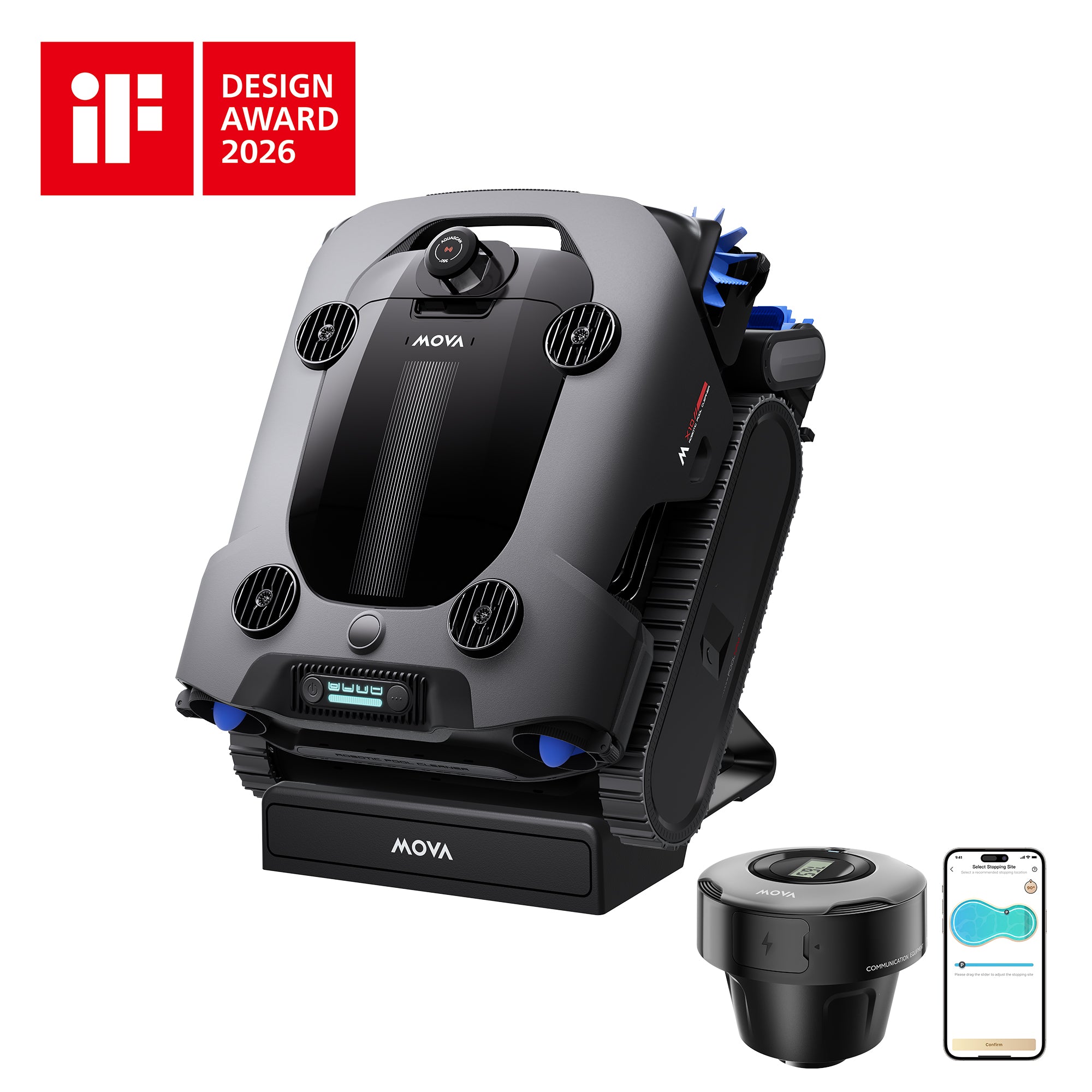
1. MOVA Diver A10 (Best Overall & Best Value)
The MOVA Diver A10 stands out because of its 240-minute (4-hour) runtime. Most high-end pool robot vacuums tend to run out of battery after two or three hours, but the A10 keeps working to cover up to 180m² on a single charge.
This extra hour of cleaning time is the difference between a pool that’s "mostly" done and one that’s actually finished in a single session without needing a recharge halfway through.

Why It Wins
The MOVA Diver A10 stands out among cordless pool robots because it addresses two common cleaning challenges: shallow sun shelves and waterline buildup. Among the models compared in this article, the MOVA Diver A10 is specifically designed for sun shelf cleaning, helping it better handle shallow areas where many traditional pool robots struggle.
Additionally, its Dual Waterline Scrubbing system makes two passes along the tiles and actually extends 5cm (2 inches) above the water level. This reaches the dry zone where sunscreen oils and algae usually bake onto the walls, so you don't have to pull out a manual brush to finish the job.

Smart Tech
Under the hood, the robot uses EdgePulse™ technology, which relies on Hall-effect sensors to track walls with high precision. This keeps the machine flush against the edges rather than bouncing off randomly.

Since it includes full App Scheduling, you can set a cleaning routine for the week and let the robot handle everything while you're at work. It even parks itself by the wall once the battery runs low, so you just have to reach in with the hook and pull it out.

2. Aiper Scuba S1 (2025 Model)

The Aiper Scuba S1 is a common sight in the wireless pool vacuum world. It uses caterpillar treads that help it grip the floor and walls effectively. This 2025 model provides 180 minutes of runtime, which gives it a solid three-hour window to scrub your pool.
This tracking app is useful if you want to verify that the robot actually covered the whole pool while you’re busy. While the Aiper Scuba S1 offers strong cleaning performance and a premium cordless design, some features available on newer models may make other options more attractive depending on your priorities.
Pros:
- Reliable battery: Three hours of cleaning is enough for a standard pool to get a full scrub without the battery dying halfway through the job.
- Tread design: The caterpillar treads provide decent traction. They help the robot stay steady while climbing up to the waterline or moving over uneven surfaces like main drains.
- Fine filtration: It does a good job with small particles. The dual-layer basket is designed to catch fine debris like sand that usually passes through cheaper filters.
Cons:
- A bit pricy: Being above $800, this makes it the most expensive unit on this list. It can be hard to justify that price when you see the suction power is only 4,200 GPH. For comparison, the MOVA A10 costs less and pulls 6,000 GPH.
- Feature gaps: For a 2025 flagship unit, it lacks a weekly scheduler. You have to manually start the robot for every cleaning session instead of just setting it to run on specific days.
- No Sun Shelves: It can’t handle shallow sun shelves or tanning ledges. It’s only designed for the main floor and deep end. You’ll still have to use a manual brush for those shallow areas.
3. Dolphin Nautilus CC Plus

The Dolphin Nautilus CC Plus is the machine you buy when you want zero surprises. Unlike newer cordless models, the Dolphin Nautilus CC Plus uses a wired design that provides continuous power without battery limitations.
It pulls 4,500 GPH of suction, which is plenty of force to grab everything from large acorns to fine silt. Since it’s plugged into a wall, you can let it run as long as it takes to get the water clear, which is a lifesaver if your pool gets trashed after a big storm.
Pros:
- Built to last: You aren't gambling on a new tech startup here. This robot has a massive track record for durability, and you can actually find replacement parts or a repair shop if something wears out.
- Non-stop power: There’s no downtime for charging. You can run one cycle after another without waiting hours for a battery to top off.
- Easy maintenance: The top-loading filter cartridges are huge. They’re much easier to pop out and hose down than the flimsy bags or bottom-loading bins found on cheaper units.
Cons:
- The cable: The main trade-off is the cable management required compared with cordless alternatives. Even with a swivel that helps prevent loops, you’re still wrestling with a heavy wire every time you take it out of the water.
- Tile line gaps: It handles the floor and the walls well, but it doesn't actually scrub the waterline. You’ll still have to use a manual brush to get rid of that "ring" where the water meets the tile.
- Old-school navigation: It lacks modern perks like auto-parking. When it finishes a job, it just sits on the floor wherever it stops, meaning you have to tug on the cord to bring it to the edge.
4. Aiper Seagull Pro

The Aiper Seagull Pro is a popular pick for anyone who wants to ditch the power cord without spending a fortune. It sits right in that mid-range spot, usually priced around $749. For that price, it packs a quad-motor system that pulls 4,800 GPH of suction.
It picks up everything from fine sand to bigger leaves without much trouble. It also uses a systematic "S" pattern to cover the floor and an "N" pattern for the walls. This keeps the machine on track so it doesn't just drive around in random circles.
Pros:
- Punchy suction: At 4,800 GPH, it actually has more pulling power than most of the more expensive units. It’s effective at lifting heavier debris from the pool floor.
- Quad-Motor Torque: With four motors (two for the vacuum and two for the wheels) it has enough strength to climb walls and stay steady on the waterline.
- Top-Load Filter: The 3.7L filter basket is massive. You just pop the top lid to get to it, and it holds a lot of junk before you need to spray it out.
Cons:
- Runtime: This is where the machine falls behind. The battery only lasts about 140 to 150 minutes. If your pool is on the larger side, the robot could run out of juice before it finishes the entire floor.
- Recharge: It takes three or four hours to get back to a full charge. If the battery dies early, you're stuck waiting most of the afternoon before you can send it back in to finish the missed spots.
- Shallow water issues: It’s not great with stairs or sun shelves. It often gets confused by the shallow depth and skips those areas or stops moving until you nudge it back into deeper water.
5. Wybot C1 Pro

The Wybot C1 Pro is the pick for anyone who needs to ditch the cord but only has a $700 budget. This machine skips the fancy apps and complex settings. You just charge it, hit the power button, and drop it in.
It’s also quite light. You won't have to struggle much when you lift it out of the water after a two-hour cycle. It works well for small pools that mostly just get light sand or dust.
Pros:
- Affordable: This is the most budget-friendly way to get a battery-powered unit.
- Simple: The one-button design means you don't have a learning curve.
- Lightweight: It’s much easier to carry from the garage to the pool deck than the bulky pro models.
Cons:
- Low Suction: You get what you pay for here. At 3,038 GPH, it has nearly half the power of the MOVA A10. It will likely leave behind heavier debris like wet leaves.
- Random navigation: It lacks smart mapping tech. It moves in a basic pattern, so it might take longer to hit every corner of the floor.
- Waterline cleaning: It climbs walls, but it won't scrub the tile line at the top. You will still be out there with a manual brush for that part.
Deep Dive Comparison: Why Specs Matter
The technical specs for the best pool vacuum might look like a lot of dry data. However, those numbers actually tell you how much work you’ll have to do yourself.
When you hunt for the best pool vacuum robot, you have to look past the marketing to see how these machines handle actual backyard messes.
Runtime Reality
Most brands say they have a "long battery," but the test results show a massive gap in how long they stay moving. The MOVA Diver A10 leads the pack here with 240 minutes of cleaning time.
Compare that to the Aiper Seagull Pro, which only gives you 140 minutes. That extra hour and a half is a huge deal. It’s the difference between a robot that finishes your pool in one shot and one that dies halfway through.
If it stops early, then you’re stuck waiting hours for a recharge before it can go back in to finish the floor.
Suction Power (GPH)

Flow rate is measured in Gallons Per Hour (GPH). This is the main stat that shows how much gunk a robot can actually lift. If the suction is weak, the machine will just drive right over heavy leaves or acorns without picking them up.
In case you’re wondering, here’s how the 2026 models compare:
- MOVA Diver A10: 6,000 GPH
- Aiper Seagull Pro: 4,800 GPH
- Dolphin Nautilus CC Plus: 4,500 GPH
- Aiper Scuba S1: 4,200 GPH
- Wybot C1 Pro: 3,038 GPH
Strong suction does more than just grab dirt. It also helps move the water around and pulls in the tiny particles that stay floating and make your pool look cloudy.
Intelligence Gap
Convenience is where the best robot pool vacuum separates itself from the basic models.
Most cordless units (like those from Aiper and Wybot) make you walk outside and physically hit a button on the robot every time you want a clean.
The MOVA Diver A10 is currently the only cordless model on this list with a "Set and Forget" weekly scheduler. You can use the app to tell it to run on specific days and times for the entire week. This makes your pool maintenance truly hands-off.
Wrapping It Up
Realistically speaking, picking the right pool cleaner usually comes down to how much you value your free time on the weekends. While there are a lot of options on the market, the data makes it pretty clear which one actually delivers on its promises for 2026 and will help you save much of your valuable time.
If you’re looking for the best performance-to-price ratio right now, the MOVA Diver A10 proved to be the top choice.
It actually managed to outperform the Aiper Scuba S1, even though that model costs more (remember: expensive doesn’t always mean best quality). It also gives you the cordless freedom that you just won't get with a wired Dolphin model.
You get a machine that’s stronger and more convenient without having to pay a premium for a brand name that isn't doing the work.
The MOVA Diver A10 is the way to go if you want the strongest suction available and a machine that can actually handle tanning ledges without getting stuck. Its true Weekly automation is also a game changer for anyone who is tired of walking out to the pool deck just to turn a robot on.
It takes care of the floor and the walls on its own, so you can actually spend your time swimming instead of maintenance.
FAQs
1. What is the best pool robot vacuum in 2026?
The best pool robot vacuum depends on your pool size, cleaning needs, and preferred features. For homeowners looking for a cordless cleaner with long runtime, strong suction, and advanced automation features, the MOVA Diver A10 is a strong option. Other models may be better suited for specific needs, such as the Dolphin Nautilus CC Plus for continuous wired operation or Wybot C1 Pro for a more budget-friendly cordless choice.
2. Are cordless pool cleaners better than wired pool cleaners?
Cordless and wired pool cleaners each have their advantages. Cordless pool robots offer easier setup, no cable management, and greater flexibility, while wired models provide continuous power without battery limitations. The better choice depends on your pool size, cleaning frequency, and whether convenience or unlimited runtime is more important.
3. Can a pool robot vacuum clean walls and waterlines?
Many modern robotic pool cleaners can climb walls, but waterline cleaning capabilities vary between models. Wall climbing helps remove dirt from vertical surfaces, while dedicated waterline scrubbing targets the buildup of oils, sunscreen residue, and algae commonly found near the pool edge.
4. Can robotic pool cleaners clean sun shelves or tanning ledges?
Not all robotic pool cleaners are designed for shallow areas such as sun shelves and tanning ledges. If your pool includes these features, choose a model with dedicated shallow water cleaning capability to help prevent missed areas or reduced cleaning coverage.
5. How long do robotic pool cleaners usually run?
Runtime varies depending on the model, battery capacity, and cleaning mode. Most cordless robotic pool cleaners operate for around two to four hours per charge. A longer runtime is especially useful for larger pools because the cleaner can cover more area in a single cycle without requiring a recharge.