















A robot vacuum should make life easier, not add unwanted noise to your home.
With more people working remotely, attending online meetings, studying, or caring for children and pets at home, excessive cleaning noise can quickly become disruptive. Loud robot vacuums may interrupt calls, disturb naps, or make it harder to relax and focus.
That's why many homeowners now look beyond cleaning power alone. The ideal robot vacuum combines effective dirt removal with quiet operation, allowing it to clean in the background without drawing attention.
Modern robotic vacuums achieve this through smarter navigation, improved motor design, and intelligent cleaning modes. Brands like MOVA focus on balancing strong performance with reduced noise, helping users maintain both clean floors and a peaceful home environment.
Why Noise Matters: Understanding Decibel Levels in Robot Vacuums
When comparing robot vacuums, noise levels are typically measured in decibels (dB).
To put those numbers into perspective:
|
Sound Source |
Approximate Noise Level |
|
Quiet library |
40 dB |
|
Refrigerator hum |
45 dB |
|
Normal conversation |
60 dB |
|
Busy office |
65 dB |
|
Traditional upright vacuum |
70–80 dB |
For most households, robot vacuums operating within the 55–60 dB range are generally considered quiet enough to run during daily activities without becoming a major distraction.
Of course, the perceived loudness depends on room size, flooring materials, furniture placement, and personal sensitivity. A vacuum running at 58 dB in an open-plan apartment may feel significantly quieter than a less efficient model operating at a similar level but repeatedly colliding with obstacles.
This is why evaluating noise involves more than simply checking a specification sheet.
What to Look For: Essential Features for a Peaceful Clean
Achieving a truly quiet clean requires addressing multiple mechanical layers within the machine. Sound isn't generated by just one component; it is a combination of several active systems:
1. Suction Motors
The suction motor is usually the primary noise source.
Higher suction power often requires faster motor rotation, which can generate more sound. However, modern brushless motors and optimized airflow systems can significantly reduce operational noise while maintaining strong cleaning performance.
The quality of motor engineering often matters more than raw suction numbers alone.
2. Roller Brushes
Brushes continuously interact with hard floors and carpets.
Hair tangles, debris buildup, and poorly designed brush structures can increase friction and create irritating high-pitched sounds over time. Some users notice that their robot vacuum becomes louder months after purchase simply because hair accumulation causes additional strain on the brush assembly.
3. Wheels and Obstacle Climbing
Every bump against furniture legs, thresholds, or walls contributes to overall noise perception.
Older navigation systems often cause robots to repeatedly collide with obstacles before determining a path forward. The resulting impacts may not register as high decibel levels, but they can be far more disruptive than consistent motor noise.
4. Self-Emptying Stations
Many premium robot vacuums include automatic dust collection stations.
While convenient, the emptying process often generates a short burst of noise that can be significantly louder than normal cleaning operation. Some systems can reach vacuum-like sound levels for several seconds during dust transfer.
5. Mop Washing and Drying Systems
Advanced robot vacuums now wash and dry their own mop pads.
These maintenance cycles use pumps, fans, and airflow systems that contribute additional sound. The design quality of the docking station plays a major role in determining how noticeable these processes become.
Best Quiet Robot Vacuums for Different Home Types
A quiet robot vacuum isn't necessarily the one with the lowest decibel rating. In real-world use, the quietest experience often comes from a robot that cleans efficiently, avoids getting stuck, and completes its tasks quickly without repeated interruptions.
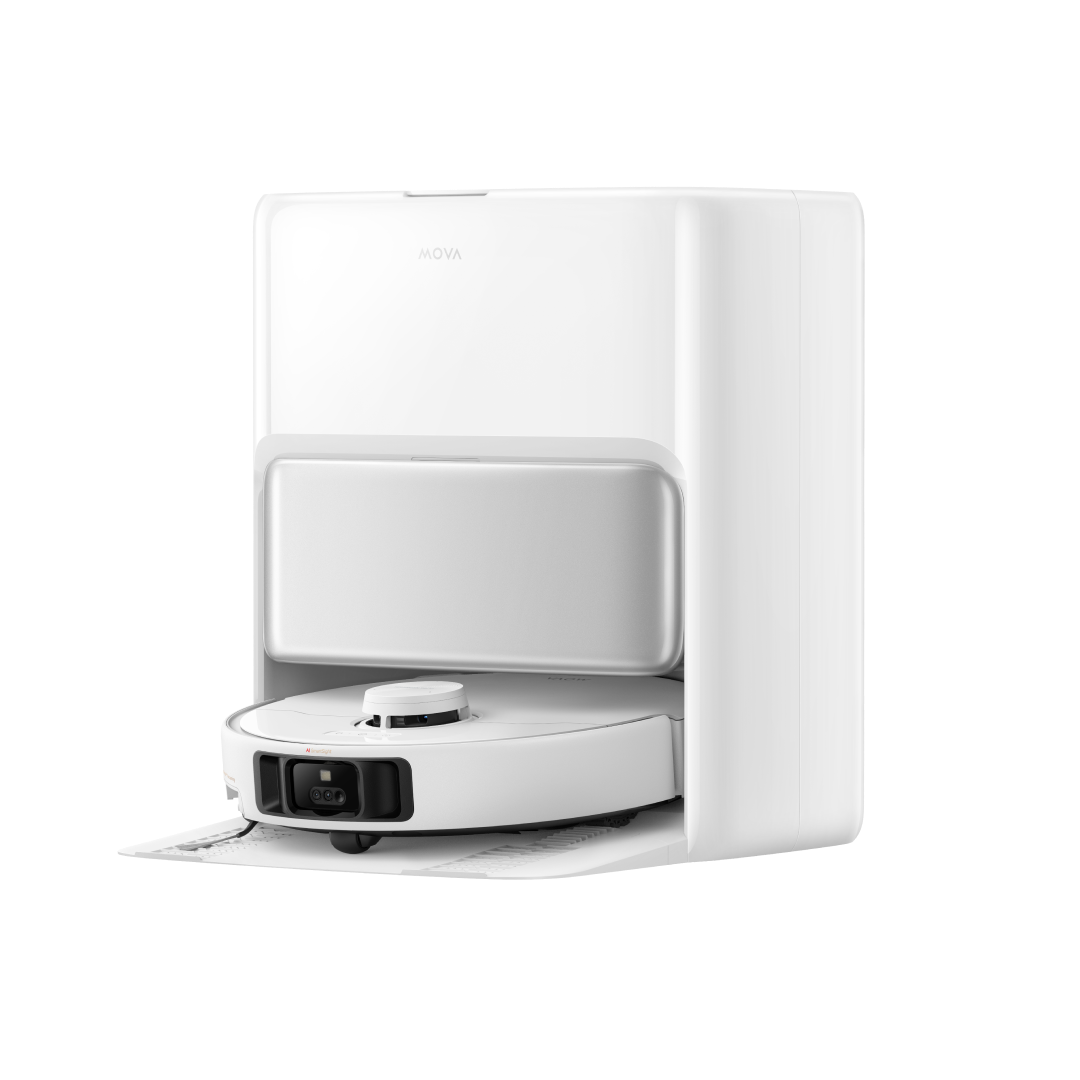
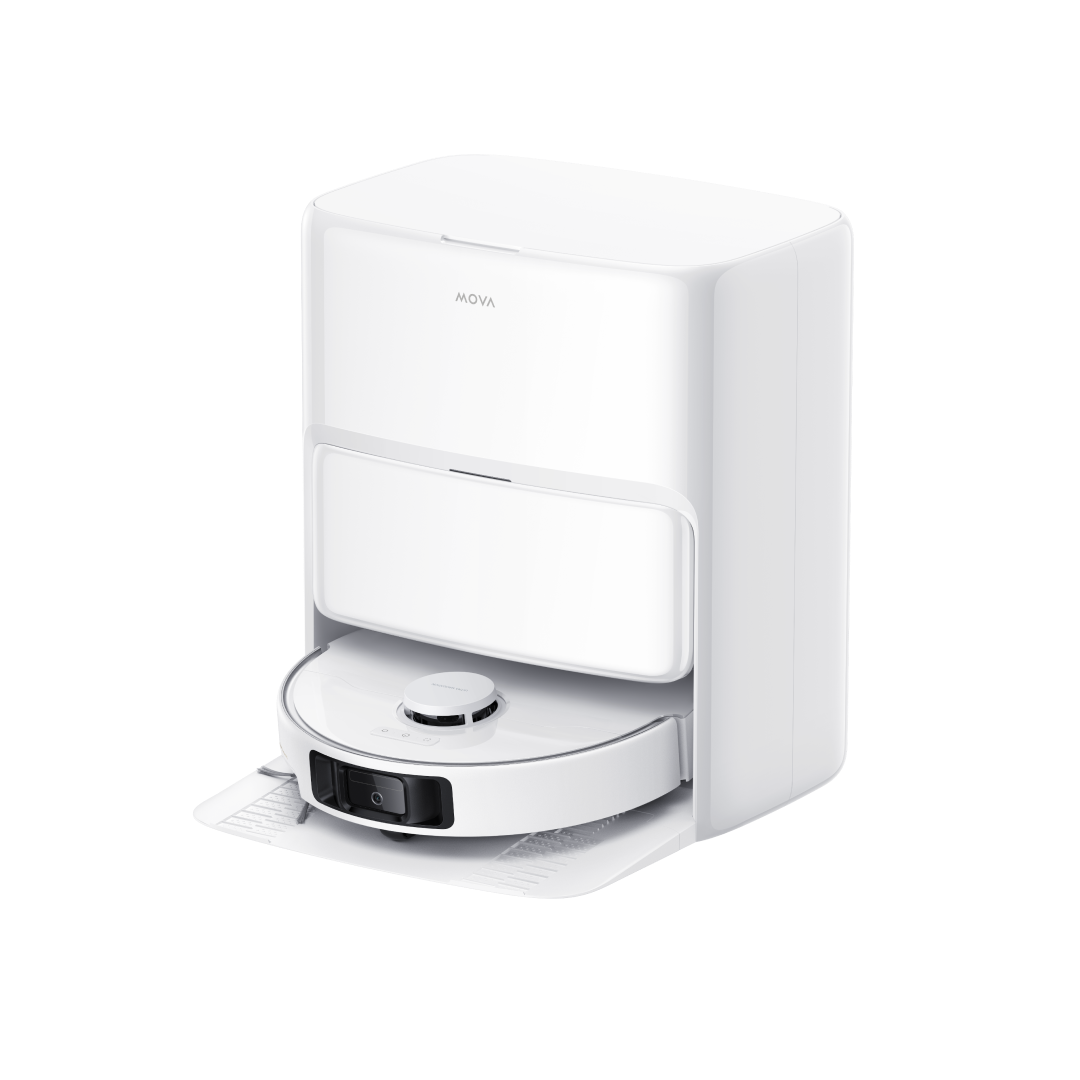
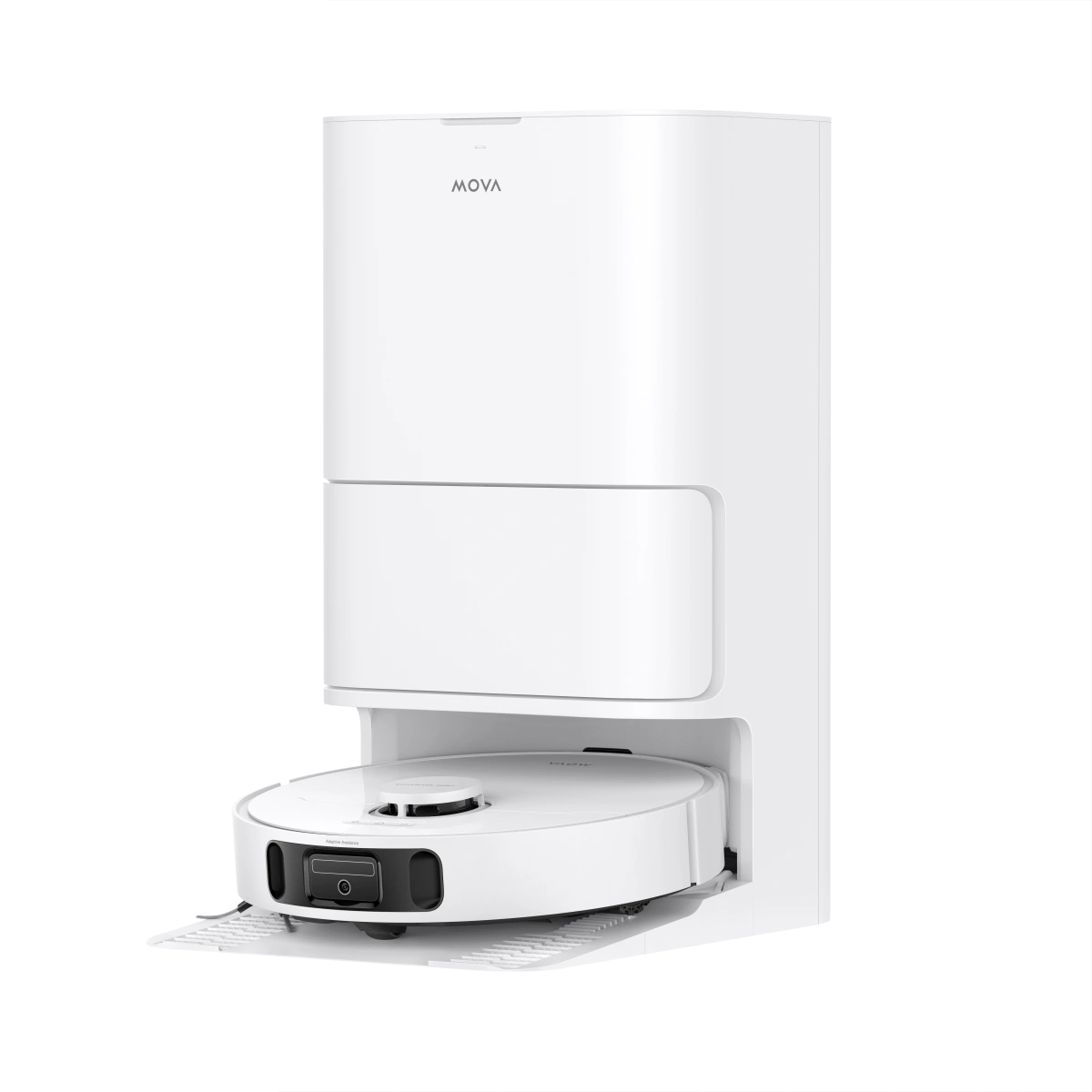
For homeowners looking for powerful yet unobtrusive cleaning, MOVA offers two standout options designed for different living environments.
MOVA V50 Ultra Complete: The Power-Efficiency Master
For larger homes, busy households, and pet owners, the MOVA V50 Ultra Complete is designed around one simple principle: finish cleaning faster so your home stays quieter overall.
Rather than relying solely on raw suction power, the V50 Ultra Complete uses intelligent navigation and advanced path-planning algorithms to map rooms efficiently and eliminate unnecessary movements. The result is shorter cleaning sessions, less repeated coverage, and reduced overall noise exposure throughout the day.
Its industry-leading 24,000Pa Hyper-Suction provides deep cleaning performance across hard floors and carpets, while intelligent route optimization ensures that power is applied where it's needed most.
Another key contributor to a quieter experience is the robot's obstacle-crossing capability. Traditional robot vacuums often struggle with thresholds and rugs, repeatedly backing up and attempting the same climb multiple times. This can create surprisingly disruptive noise.
The V50 Ultra Complete addresses this issue with StepMaster™ technology, enabling it to cross obstacles up to 6cm in height with stability and precision. Instead of repeatedly bumping against barriers, the robot moves smoothly through the home, reducing unnecessary motor strain and operational noise.
Additional features such as Intelligent Auto-Mop Detachment and the Zero-Maintenance Base Station further streamline cleaning while minimizing user intervention.
MOVA MOBIUS 60: The Silent All-in-One Expert
For families seeking the ultimate hands-free cleaning experience, the MOVA MOBIUS 60 combines powerful performance with intelligent automation designed to operate quietly in the background.
The standout feature is its fully automated docking station, which handles dust collection, mop washing, water refilling, and maintenance tasks with minimal user involvement. By automating routine upkeep, the system helps maintain consistent cleaning performance without frequent manual interaction.
The MOBIUS 60 also features 30,000Pa suction power and Dynamic Suction Retention technology, ensuring strong carpet cleaning without running at maximum intensity longer than necessary. Its intelligent power management helps optimize cleaning efficiency while reducing unnecessary noise generation.
StepMaster™ 2.0 robotic legs allow the robot to climb obstacles up to 3.14 inches (8cm), preventing the repetitive bumping and wheel spinning that often contribute to perceived noise in challenging home layouts.
Meanwhile, FlexScope™ Navigation continuously adapts to the surrounding environment, allowing the robot to move smoothly under furniture and around obstacles with fewer corrections and interruptions.
Combined with its hands-free maintenance system and advanced cleaning intelligence, the MOBIUS 60 is ideal for homeowners who want a true "set-it-and-forget-it" cleaning solution.
Can a Robot Vacuum Be Both Quiet and Powerful?
The short answer is yes. Advances in robot vacuum technology have made it possible to achieve strong cleaning performance without excessive noise.
The Evolution of Modern Robot Vacuums
Several innovations have helped reduce noise while improving cleaning effectiveness:
- Intelligent airflow engineering for more efficient suction with less noise
- AI-powered cleaning that reduces unnecessary movement and cleaning time
- Advanced brush technology that minimizes tangles, friction, and motor strain
Why Today's Premium Models Don't Sacrifice Performance
Modern robot vacuums focus on working smarter, not just harder.
- Smart power distribution adjusts suction based on cleaning needs
- Adaptive cleaning modes balance performance and noise levels
- Improved efficiency allows robots to clean faster and spend less time operating
As a result, premium robot vacuums can now deliver deep cleaning while remaining far less disruptive than earlier generations.
Conclusion
A peaceful home and a thoroughly cleaned home no longer have to be mutually exclusive.
When choosing a quiet robot vacuum, look beyond simple decibel ratings and consider the technologies that influence the overall cleaning experience—smart navigation, adaptive suction, anti-tangle brush systems, efficient obstacle crossing, and intelligent automation.
Products like the MOVA V50 Ultra Complete and MOVA MOBIUS 60 demonstrate how modern robotic vacuums can deliver powerful cleaning performance while operating with minimal disruption. Whether you prioritize faster cleaning, advanced automation, or hands-free maintenance, today's best robot vacuums make it possible to enjoy spotless floors without sacrificing the comfort and tranquility of your home.
FAQs
What is the quietest type of robot vacuum?
The quietest robot vacuums are models equipped with brushless motors, streamlined internal airflow paths, and dedicated "Quiet" or "Eco" modes. To ensure a peaceful home, look for premium models that operate between 55dB and 60dB on standard settings. Additionally, models featuring advanced AI navigation are naturally quieter because they smoothly avoid collisions rather than constantly thudding into furniture and baseboards.
Are self-emptying robot vacuums louder than regular models?
During their actual cleaning cycles, self-emptying models are just as quiet as regular vacuums. However, the self-emptying process at the docking station is temporarily much louder—often reaching 70dB to 80dB—as a high-powered vacuum extracts debris from the robot. Premium stations, like those for the MOVA V50 Ultra Complete, minimize this disruption by compressing the self-empty cycle into a few brief seconds and offering customizable "Do Not Disturb" schedules to prevent emptying at night.
Is a higher suction robot vacuum always noisier?
Not anymore. Historically, raw suction power required high motor speeds, which generated substantial noise. Modern premium vacuums solve this through intelligent fluid dynamics and adaptive engineering. For example, the MOVA MOBIUS 60 achieves an industry-leading 30,000Pa suction quietly by utilizing a physical, pressure-sealing baffle that concentrates airflow directly at the floor level, extracting deep-seated dirt without forcing the motor to run at its loudest, unsealed capacity.
Can I run a robot vacuum while working from home?
Yes, provided you choose a model with granular suction control and smart mapping. By switching the vacuum to its lowest suction setting via its companion app, the operational sound drops to a gentle background hum that won't disrupt video calls or deep focus. Furthermore, using AI path planning allows you to direct the robot to clean specific zones—like the kitchen or hallway—while keeping your home office entirely undisturbed.
Which quiet robot vacuum is best for pet hair?
The best quiet robot vacuum for pet hair is one that pairs strong suction with an anti-tangle roller brush design. When pet fur wraps tightly around a standard brush, it strains the gears and forces the motor to emit a high-pitched mechanical whine. The MOVA V50 Ultra Complete is exceptionally well-suited for pet owners; its TroboWave™ DuoBrush system automatically channels hair to the edges of the roller for seamless extraction, preventing motor strain and maintaining a whisper-quiet clean.